

Keynote Address on the Occasion of the Golden Jubilee of Benue State,
the Third Anniversary of the Administration of
His Excellency, Rev. Fr. Dr. Hyacinth Iormem Alia,
Democracy Day, and the Sixtieth Birthday Celebration of
His Excellency, the Executive Governor of Benue State
Makurdi — 27 June 2026
Delivered by
PROFESSOR YAKUBU ABOKI OCHEFU
Professor of Economic History and Development Studies
Rev. Fr. Moses Orshio Adasu University, Makurdi
PROTOCOL
Your Excellency, Rev. Fr. Dr. Hyacinth Iormem Alia, Governor of Benue State, and our gracious
host on this august occasion; Your Excellency, the Deputy Governor; the Speaker of the Benue
State House of Assembly; the Chief Judge and the President of the Customary Court of Appeal;
the Chairman of the Occasion, our father and elder statesman of the federation, General Yakubu
Gowon; their royal majesties, the Tor Tiv, Professor James Ayatse and the Och’Idoma, Dr.
Elaigwu Odogbo Obagaji and the paramount and traditional rulers here assembled; my Lords
Spiritual of the Catholic, Methodist, Anglican and NKST Communions and the leaders of our
other faith traditions;; distinguished members of the National Assembly and of the Benue State
House of Assembly; Vice-Chancellors, Rectors and Provosts of our universities, polytechnics and
colleges of education; my distinguished colleagues of the academia; captains of industry and the
professions; members of the press, sons and daughters of Benue, at home and in the diaspora; our
children and young adults; ladies and gentlemen. I greet you all.
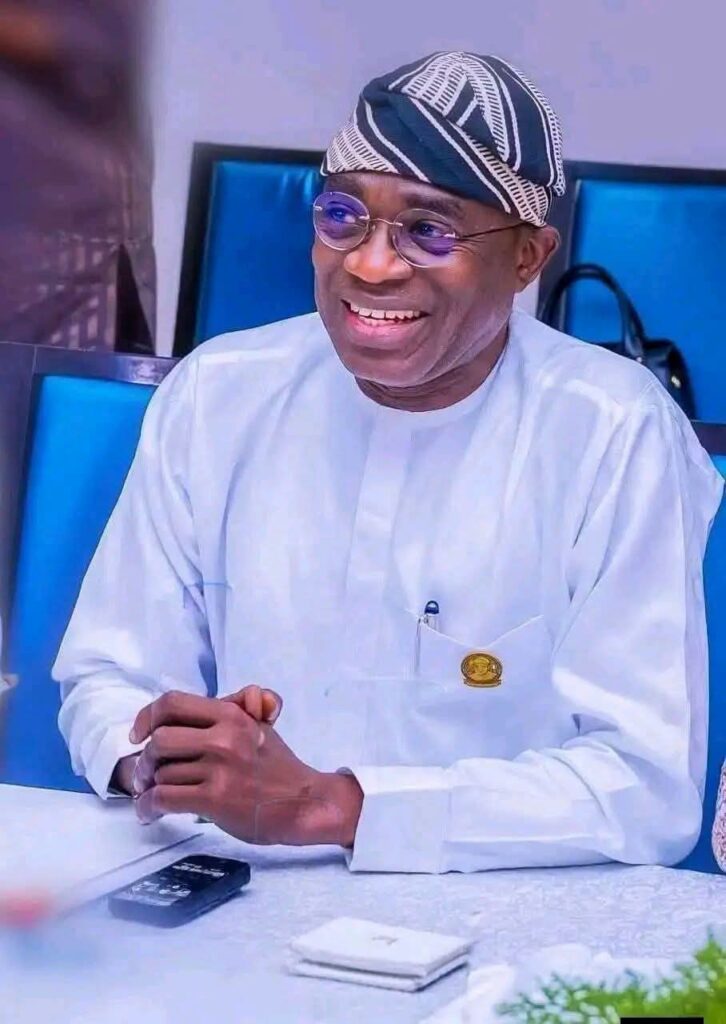
HIS EXCELLENCY REV. FR. DR. HYACINTH IORMEM ALIA
EXECUTIVE GOVERNOR OF BENUE STATE
I. THE RIVER THAT GAVE US OUR NAME
Permit me to begin with our name. The word Benue, in the language of the Bata
people who first sang it, means Mother of Waters. The great river from which our
state takes its name has carried, for centuries, an Africa larger than ourselves in the
trade and traffic of empires, the salt of the savannah, the produce of the forest, and
the boats and the burdens of numerous peoples. To live by the Benue is to live
beside an artery of possibilities. We meet today, fifty years after our political birth,
to ask what we have made of the inheritance the river named for us. Let me begin
where our statehood began.
II. AN IMAGE FROM A MORNING IN 1976
On the morning of the 3rd of February, in the year 1976, the Federal Military
Government of General Murtala Ramat Mohammed announced to the Nigerian
people the creation of seven new states. Among them was a state carved from the
southern half of Benue-Plateau, with its capital at Makurdi. When the name “Benue
State” entered the official record on that harmattan morning, it completed a journey
that had begun in the colonial reading rooms of the 1920’s, gathered momentum in
the United Middle Belt Congress under Pastor David Lot, hardened into political
demand in the long and principled labour of Joseph Sarwuan Tarka and his
generation, and arrived, at last, on a morning that some in this venue still remember
in their bones. We are gathered today, fifty years and four months after that morning,
to ask ourselves what we have made of the gift we were given, and what we propose
to leave behind for those who will gather in this same city in the year 2076.
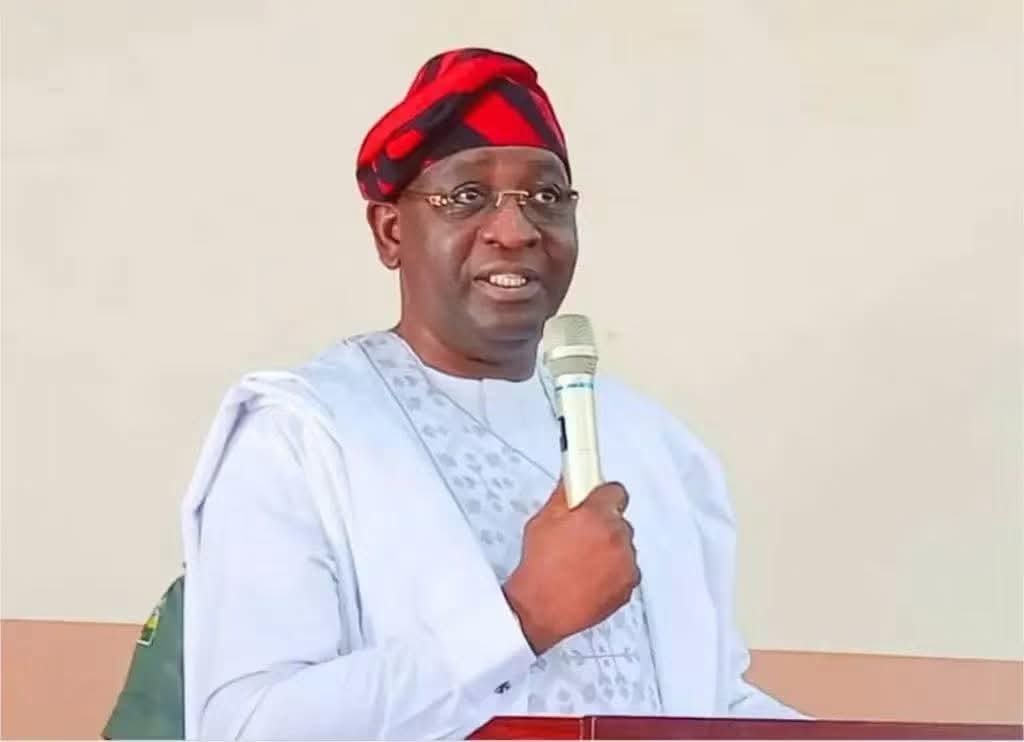
HIS EXCELLENCY DR. SAM ODEH,
DEPUTY GOVERNOR OF BENUE STATE
III. THE HALF-CENTURY BEHIND US
A. The Founding Moment
Benue State was not an administrative convenience. It was the long-deferred
reply of the Nigerian federation to a Middle Belt question that had pressed itself
upon successive generations since the nineteen-fifties. Tarka spent a political lifetime
arguing, alongside D.Lot, I.Shaahu, P.Dokotri, J.C Obande and others of his
generation, and against the prevailing currents of the Northern political
establishment, that the peoples between the Niger and the Benue like the Tiv, Idoma,
Igala, Igede, Etulo, Ufia and our many cousins of the savannah belt required a
political vehicle of their own if they were to enter the federal compact as full
participants rather than as wards of larger neighbours. General Yakubu Gowon, which
sits with us today as our gracious Chairman, was the first to answer that demand in
part, with the creation of Benue-Plateau State in 1967. The Murtala-Obasanjo states
creation exercise was the more complete vindication of the longer argument: it
separated us from Plateau, it placed in Makurdi a capital of our own, and it deposited
in the hands of the Tiv, Idoma, Igala, and minority peoples a state instrument that
we have spent the half-century since learning to use, to misuse, and slowly to master.
There is a story, told and retold by those old enough to remember of those first
weeks, when the convoys that left Jos for Makurdi after the new structure was
announced. The civil servants of the old administration loaded their files and their
families and made the journey south to the new capital. One name from those days
that some of our elders will remember is Orshio Adauke, who, as the story goes,
blew the gida without rest from Jos to Makurdi, the horn announcing to our peoples
that the new state had a new capital, and that we were going home to it. For the first
15 years of our state, the Igala were of us, until Kogi was carved away in 1991, and
the burden of nation-building within these borders became, more concentratedly,
the burden of the Tiv, Idoma, Igede, Etulo, Jukun, Nyifon, Ufia, Igbo, Hausa and
other minorities in their valleys and on their hills. Whatever else we say tonight, let
us acknowledge the men and women, mostly now departed, whose labour gave us
the territorial fact we now call Benue. They imagined us before we existed.
B. The Gubernatorial Eras
The half-century divides itself, for the historian, into successive military and
gubernatorial dispensations. The administration of General Abdulahi Shelleng was
the first to occupy Government House Makurdi. An almunus of the famous Barewa
College and Military Academy of Pakistan, Shelleng’s administration invested heavily
in housing, roads, and most vitally, in tertiary education. As at the time the state was
created, there was not a single tertiary institution within its borders. The three
institutions established laid the foundation for the human capital that went on to
build the new state. Aper Aku, the first civillain to occupy Government House, gave
us the founding developmental imagination of Benue the Food Basket branding, the
first generation of state corporations, and the early infrastructure of Makurdi,
Otukpo, Gboko and Katsina-Ala. The long military interregnum that followed
produced administrators, such as Atom Kpera, Fidelis Makka, Aminu Kontagora
and Dominc Oneya, with a few of them who were visionaries, that extended the
developmental momentum of Aper Aku.
The brief but impactful Adasu interlude of the Third Republic, brought to its
abrupt end by the Abacha coup of 1993, gave us a glimpse of what civilian Benue,
in the hands of a thoughtful son of the soil, might have become. The takeoff of a
university, the first of its kind in northern Nigeria, that bears his name today, stands
as clear testimony to that brief vision. The Akume years, opening the Fourth
Republic, deserve the historian’s particular acknowledgement for the plethora of
institution-building ushered in under the Benue Advance Plan: the consolidation of
Benue State University with a College of Health Sciences and a Teaching Hospital,
the establishment of several industries designed to add value to our agricultural
outputs, and the urban improvement and housing schemes that reshaped Makurdi
for a new generation. The Suswam years brought us further infrastructure,
particularly in connecting distance-reducing access roads that knitted our local
government areas more tightly to their senatorial capitals. The Ortom years brought
us, above all, the Open Grazing Prohibition and Ranches Establishment Law of
2017 an act of legislative courage whose long verdict history is still writing and a
confrontation with the herder-farmer crisis that has cost us, in lives, in livelihoods
and in displaced persons, more than any peacetime burden we have borne since
1976.

PROF. YAKUBU ABOKI OCHEFU
C. The Priest in Government House
Benue State carries a singular distinction in Nigeria: we are the only state to have
been governed, at different chapters of our half-century, by two Catholic priests.
The administration of His Excellency the Rev. Fr. Dr. Hyacinth Iormem Alia, which
opened in May 2023 is the second occasion on which the seal of the Governor has
been held by a priest. The first, of course, was Father Moses Orshio Adasu, in whose
brief governorship the present Governor was, by the accident of biography, a young
priest in the early years of his ministry. Permit me a word on this. The man before
us is, at 60, both Father Alia and Governor Alia, and the moral burden of his
vocation and the executive burden of his office have, by the providence of the
Nigerian electoral calendar, fallen upon the same shoulders. As historians, we do not
flatter; we observe and document. What I observe is that a state whose deepest
wound has been the wound of bloodshed and political injustice has, at fifty, been
entrusted to a man whose first vocation was the cure of souls. Whether that
providence becomes a defining feature of our half-century to come will depend on
choices yet to be made by him, by us, and by the generation that follows. But the
symbolism is not small, and I would be a poor historian not to name it.
D. Four Wounds We Carry
A historian who loves his subject must speak its wounds. Benue at 50 carries four
major ones. The first is the security wound and the displacement crisis that flows
from it; by Amnesty International’s estimate at the close of 2004, approximately
500,000 of our people sleep, on this night, in camps within our own borders. The
second is the fiscal wound: at last accounting, roughly eight in every ten naira spent
by this state arrive from the federal allocation, and our internally generated revenue
accounts for less than one in ten a structural dependence too narrow to carry our
ambitions. The third is the Food Basket wound: we feed the nation in calories and
starve ourselves in value, exporting raw yam, raw rice, raw soya bean and raw sesame,
and importing the processed forms of our own labour. And the fourth the deepest,
because it lies beneath the other three is the wound of the divided elite. Chinua
Achebe wrote, four decades ago, that the trouble with Nigeria was simply and
squarely a failure of leadership. The trouble with Benue, in important measure, has
been a failure of elite consensus: a generation of our most able sons and daughters
who have agreed on too little, contested too much, and bequeathed to our peoples
a compact among the Tiv, Idoma, Igede, Etulo and the minorities within minorities
that fifty years has neither completed nor abandoned.
E. And Yet
And yet. And yet, this state has produced, per capita, one of the densest
professional diasporas in the Nigerian federation. Justices of the apex court,
presidents of the Senate, generals of the armed forces, vice-chancellors of
universities far from home, captains of industry, and a roll-call of academic
distinction that any state in this republic might envy. From the early ethnographic
labour of Akiga Sai to the literary and scholarly traditions that followed him, from
Tiv swange to Idoma ogrinya, from Innocent Idibia carrying our music across the
continents to three sons of Benue presently bearing our colours on the football fields
of the national team, from the academy to the cabinet where a son of this soil
presently holds the office of Secretary to the Government of the Federation, we
have given Nigeria a sensibility, a music, a literature, a sport, and a politics. The
Benue we built in fifty years has its wounds, but it is not a small thing, and the men
and women who made it are not small people. It is, rather, the foundation upon
which our next fifty years must rise.
IV. WHAT, THEN, MUST WE DO?
What, then, must we do? What must Benue at 50 propose to Benue at 100? What
strategic posture must this generation adopt so that, when our grandchildren read
the proceedings of this gathering in fifty years as some of them will they may say of
us that we saw the moment clearly and did not flinch from its demands? Permit me,
in the time remaining, to name six strategic pillars upon which, in my respectful
submission, the next quarter-century of our state must rest.
V. SIX PILLARS FOR THE NEXT QUARTER-CENTURY
PILLAR ONE. Security and the Return of the Displaced
The first claim upon any government is the protection of life and the conditions
of ordinary livelihood. We cannot build a Benue renaissance on land that cannot be
slept upon. The next decade must give us a settled architecture of state security: a
properly funded community policing arrangement working in partnership with
federal formations; a serious, evidence-based programme for the return, resettlement
and re-integration of internally displaced persons, with the budget lines and the
timelines to match; and a long, patient diplomacy with our pastoralist neighbours
that converts the present antagonism into a regulated coexistence. This last task is
not a betrayal of the Anti-Open Grazing Law; it is its maturation. A law is a
beginning, not a destination. The security pillar must also include serious investment
in intelligence, forensics and judicial throughput, so that the men who burn our
villages and kill our people face the courts of Benue and not the impunity of distance.
And it must include the technological tools that match the mobility of those who
would harm us geospatial monitoring of our rural arteries, drone surveillance along
our agricultural corridors, and the integration of security with the economic
networks it is meant to protect. St. Augustine of Hippo stated sixteen centuries ago
that “kingdoms without justice were no more than gangs of bandits”. Benue cannot
endure as a kingdom of bandits. The work has begun under the present
administration; it must be deepened and institutionalised so that no successor can
undo it.
Permit me a word on our traditional institutions, whose heads sit with us and to
whom this Jubilee owes a particular debt. The Tor Tiv, the Och’Idoma, and our
paramount and traditional rulers across the three senatorial zones have, for the fifty
years behind us and for the centuries before, been the silent custodians of Benue’s
deepest patrimony. They have kept our languages alive when the schools could not.
They have held the rites, the festivals and the kinship structures through which our
peoples remember who they are. They have arbitrated quarrels that would have
overwhelmed the courts. They have lent moral authority to every legitimate civic
enterprise that has crossed their gates. The half-century has tested every institution
in this state; few have stood as steadily as the chieftaincies.
The question before us as the federal republic moves at last toward a serious
constitutional accommodation of state policing, is whether our traditional
institutions can do for our security what they have so long done for our culture. The
answer must be yes, but a measured and structured yes. As a Benue State Police
Service emerges in the coming years, the rulership of this state has an indispensable
role to play: in the granular intelligence that only proximity to the village can provide;
in the local legitimacy without which no police force can operate among our peoples;
in the early resolution of disputes before they harden into crimes; and in the
convening of those inter-communal conversations that the formal security
architecture cannot itself conduct. The work of state policing will be technical and
bureaucratic. The work of community trust upon which it must rest will remain
traditional and customary. Both must be designed together with our royal fathers as
partners, not as subordinates and not as substitutes in the security settlement of the
next quarter-century.
PILLAR TWO. The Food Basket, Reimagined
The Food Basket motto was a marketing triumph and a developmental tragedy.
It celebrated what we grew and concealed what we did not earn. The next twenty
five years must convert Benue from a producer of calories into a producer of value:
industrial-scale agro-processing of yam, cassava, rice, soya bean, sesame, citrus and
mango within our own borders; the deliberate cultivation of a Benue agro-industrial
corridor running through Makurdi, Otukpo and Gboko; the patient construction of
cold chains, storage and logistics; and a state agricultural policy that treats the
smallholder farmer not as a relic to be subsidised but as a small business to be
capitalised. The Benue farmer is not poor because she is unproductive; she is poor
because she sells at the bottom of the value chain, and because more than forty per
cent of what her hands produce is lost between the field and the market for want of
storage, processing and road. We must move her up that chain, and we must move
her up it together, by organising the fragmented smallholdings of our valleys into
structured cooperatives and out-grower schemes whose standardised output can
feed a modern processing plant rather than a market-day buyer’s lorry. We must also
speak honestly about the climate within which our farmers now work. The rains no
longer come when our grandmothers said they would; the floods now visit us with
a regularity that twenty years ago would have seemed apocalyptic. The next quarter
century must therefore deploy smart, year-round irrigation along the Benue,
Katsina-Ala and Okpokwu river basins, breaking our complete dependence on a sky
whose habits have changed. If we do this work seriously, the Benue of 2076 will
not merely feed Nigeria; it will manufacture Nigeria’s breakfast, and earn the
foreign exchange that comes with it.
PILLAR THREE. From Food Basket to Knowledge Basket
A state with our demographic structure young, numerous, increasingly literate
has, properly understood, no greater asset than the minds of its people. The Food
Basket of yesterday must, in the next quarter-century, become the Knowledge Basket
of Central Nigeria. There is no mystery about what this requires. The Western
Region under Obafemi Awolowo demonstrated it in 1952, when the Action Group
government made the single decision free, universal, compulsory primary
education that has compounded for seventy years and continues to shape the
human capital map of this republic. We have no decision of comparable scale in our
own half-century; the next quarter must produce one.
This requires a serious educational reformation: a basic education system that
actually teaches; a technical and vocational education sector that has been, for too
long, the orphan of our policy attention; and universities and tertiary institutions, the
Reverend Father Moses Orshio Adasu University, the Joseph Sarwuan Tarka
University, the Federal University of Health Sciences Otukpo, the University of
Agriculture, Science and Technology Ihugh, the Benue State Polytechnic Ugbokolo,
the Federal Polytechnic Wanune, and the Colleges of Education at Oju, Katsina-Ala
and Odugbo funded not as ceremonial outposts but as economic engines. Every
serious state in the modern world has discovered that its tertiary institutions are not
luxuries but laboratories of its future. Rwanda, with less educational infrastructure
than we possessed in 1994, has in three decades made knowledge the principal
industry of a nation; we have no reason to attempt less. A bi-annual convocation of
the leadership of our tertiary institutions, working in concert with the State, must be
inaugurated so that this discovery is made deliberately and not by accident. Our
young people must leave our schools equipped not merely with certificates but with
the cognitive, technical and entrepreneurial equipment of the twenty-first century.
But it is not enough to train a generation of digitally fluent young Benue citizens
if the infrastructure within which they must work does not exist at home. Without
reliable power, without affordable high-speed internet access, without serviceable
workspaces, our trained youth will continue to do for Lagos and London what they
ought to be doing for Makurdi, Gboko and Otukpo and the state that paid to educate
them will subsidise the prosperity of cities that did not. This is an externality the
Benue exchequer can no longer afford. The next decade must therefore build
infrastructure-backed technology parks in each of our three senatorial zone
equipped with uninterrupted power and broadband of metropolitan quality, so that
a young programmer in Makurdi can execute a contract for a client in Frankfurt and
have her taxable income return to the soil that raised her. The Knowledge Basket
is not only a metaphor. It is an industrial strategy.
PILLAR FOUR. A Productive Fiscal Compact
We must speak honestly to ourselves about money. Benue cannot continue,
indefinitely, as a state whose recurrent expenditure is underwritten almost entirely
by federal allocation, with capital expenditure tied to the volatilities of the
international oil market. The present administration’s 2026 budget of approximately
695.01 billion naira with 54% devoted to capital and 46% to recurrent, is a decisive
turn in the right direction, and the doubling of internally generated revenue between
2023 and 2024, toward a 30 billion naira target, is a further sign of seriousness. But
the structural settlement remains incomplete. A state of our size, our agricultural
endowment and our demographic energy must build, over the next decade, an
internally generated revenue base that meaningfully shares the burden of our own
development. This is not a matter of more taxes upon the already taxed; it is a matter
of widening the base, formalising the informal, dignifying the small business that
pays into the public purse, and disciplining the public expenditure that draws from
it. A productive fiscal compact also means transparent procurement, open budgets,
debt discipline, and a Benue that can look its creditors and its citizens equally in the
eye. Fiscal seriousness is not the enemy of social ambition. It is its
precondition.
No state ever transformed itself on the strength of its government alone.
Every economy that has crossed from poverty to prosperity in our lifetime has done
so by mobilising private capital around opportunities the state had the wisdom to
create and the discipline to leave alone. Benue must now make itself, deliberately,
the most welcoming jurisdiction for private investment between the Niger and the
Benue. This will require a serious ease-of-doing-business reform, one-stop investor
windows, predictable land titling, and a procurement regime whose only currency is
competence. It will require bespoke credit instruments calibrated to the realities of
Benue enterprise the agro-processor in Otukpo, the mining cooperative in Ogbadibo
and Kwande, the woman dyer in Vandeikya, the young software firm in Makurdi
each requiring not the standard commercial loan designed for Lagos but financing
shaped to a different cash flow, a different collateral, and a different season. It will
require a deliberate strategy for our solid mineral endowment the limestone, the
coal, the gypsum, the barite, the gemstones that geology placed beneath our soil
organised into productive cooperatives and processed within our borders rather than
surrendered, as curiosities, to federal licensing. And it will require the dignifying of
our creative cultures our music, our film, our fashion, our literature, our festivals as
the industries they have already become elsewhere and have every right to become
here. The Benue economy of 2076 will not be built by ministries. It will be
built by entrepreneurs whom the state had the wisdom to attract, the
discipline to enable, and the humility to step aside for.
PILLAR FIVE. Infrastructure and the Middle Belt Hub
Geography has placed Benue at the meeting point of the eastern and northern
corridors of this federation. It has given us nearly 250 kilometres of a mighty
waterway. We have squandered, for 50 years, the opportunity that geography
offered. The next 50 must repair that squandering: a serious roads programme that
closes the trunk gaps between our three senatorial zones; the long-deferred revival
of the eastern rail corridor through Makurdi with a spur to Gboko, katsina-Ala and
Zaki-Biam; an inland waterway and container terminal positioned to serve the trans
Saharan trade as it returns to Nigerian commercial consciousness; and a digital
backbone that places every Benue town on the same broadband as Lagos and Abuja.
We must, however, name plainly the single missing link beneath all of these
ambitions: power. No modern economy has ever industrialised without sovereignty
over its electricity supply, and no Benue agro-processing plant, no Benue technology
park, no Benue cold chain will function on the slender mercies of a national grid that
has failed to deliver reliably in any decade of our statehood. Benue’s next
infrastructure settlement must therefore include a deliberate strategy of energy
sovereignty: embedded independent power projects tied directly to our industrial
zones, captive solar arrays drawing on a sun that visits us in abundance, and
decentralised mini-grids planted at the rural farm gate to drive the milling, drying
and cold-storage equipment without which our value chains cannot rise. Power is
not one infrastructure among many. It is the foundation on which every other pillar
of this address stands.
Sport is a vital part of development, not a luxury. Benue has produced outstanding
talent in football, basketball, volleyball, handball, judo and other sports, yet the
facilities needed to discover and develop this talent remain inadequate and unevenly
spread. Over the next quarter-century, Benue must invest deliberately in modern
sports infrastructure across Makurdi, Gboko, Otukpo Oju and Katsina-ala, ensuring
that no young person is disadvantaged by geography. With the right support, sport
can create jobs, build social cohesion, raise Benue’s national and global profile and
deepen civic pride. Benue has the talent; the next fifty years must provide the
infrastructure it deserves.
And finally on infrastructure, let us return to the river that opened these remarks.
The Benue did not give us our name so that we might forget it. Within our own
lifetimes, the Benue carried cargo from the coast to the savannah; within our
grandfathers’ lifetimes it carried empires. There is no economic reason, only a failure
of imagination, why it cannot do so again. The Alia administration has to its credit,
taken the historic step of creating a Ministry of Marine and Blue Economy, and the
inaugural Benue Marine Carnival of December 2025 into January 2026 was the first
credible signal that this state takes its waterway seriously as an economic asset. The
work now is to scale that signal into a programme: a serious dredging of the river,
the modernisation of inland ports at Makurdi and beyond, and the partnership with
federal and international institutions that have rebuilt river commerce in other
African basins. Responsible estimates suggest that a fully navigable Benue could
reduce the cost of moving our heavy agricultural produce to the Atlantic coast by as
much as sixty per cent. The river that gave us our name can, before our
grandchildren get old, carry our wealth.
PILLAR SIX. The Benue Compact
Finally, and this is the pillar without which the others will not hold. We must
complete the long, unfinished settlement among the peoples of Benue. Let me speak
plainly. As one whose civic duty includes the leadership of one of our peoples, I will
not pretend that this question reaches me from a neutral place. It does not reach any
of us from a neutral place; that is precisely why it is hard. But the historian in me
and, I trust, the citizen in each of us must say what the half-century requires.
The Tiv, the Idoma, the Igede, the Etulo, the Jukun and the other ethnic
minorites embedded among them must arrive at a compact that is honest, generous
and durable. The conditions of such a compact are not mysterious; they are known.
That I am Ugboju man from Otukpo Local government and my friend Obande
Egwurube is Igumale from Ado is a historical fact. So also is the fact that Governor
Alia is from Mbadede kindred of the Kunav maximal clan of an Ipusu lineage. So
also is George Akume who is Ipusu but a Mbakor of Jemgbah maximal clan. Gabried
Suswan is Shitle while Samuel Ortom is Nongo of the Iharev maximal clan of the
Ichongo Akem lineage. My friends Prof Boniface Ode and Honorable Moses
Egbodo are Obi while Prof Adagba Okpaga is from Oju. The point I am making is
that we all have our divides within our peoples and between our peoples. But in
these divides, we must have a shared vision of where Benue is going. Open channels
of communication between our peoples and their elites. Inclusive decision-making
that reflects the full breadth of who we are. Incentives that align individual political
interest with collective development. A demonstrated commitment to good
governance, transparency and the rule of law. And the willingness to adapt our
strategies as the world around us adapts. These are the six conditions; they are within
our reach.
This compact must express itself in the equitable distribution of state
opportunity, in the unwritten and written conventions by which the highest offices
of the state are shared, in the deliberate cultivation of a single Benue civic identity
that does not require the surrender of our particular cultural patrimonies, and in the
patient work of inter-ethnic conversation across our three senatorial zones. A state
divided against itself cannot deliver any of the five pillars I have named. A state
united in honest compact can deliver all of them. This is the most demanding work
of all, because it is not the work of any single administration. It is the work of a
generation. And every generation that has attempted this work has needed a
convening power a single voice with the standing to call its peoples to the table.
Your Excellency, the providence of office has placed that convening power, this
year, in your hands.
The Benue Compact begins not with the politician but with a consensus of the elite,
with us, in this arena and it begins, as a practical matter, when the convener calls.
Permit me to put concreteness where there has been only principle by posing some
questions.
■ In 2031, can our consensus be to bid for the Presidency of the Federal
Republic to come, at last, to a son or daughter of Benue?
■ Can our consensus be that the next civilian Governor of this state when the
rotation is completed come from an Idoma man or woman?
■ Can our consensus be that the next Senator from Benue South shall be of
Igede stock that minority within a minority whose seat in the upper chamber
has been too long deferred?
■ Can our consensus be that our next House of Assembly shall include the
elected voices of the Etulo and the Jukun whose presence on this land is
older than the state itself?
These are not utopias. They are the practical fruits of a single decision. If the elite
of Benue consent, if we, in this venue, agree every one of them can happen.
VI. A WORD TO THE CITIZEN OF 2076
Your Excellency, distinguished ladies and gentlemen. The four commemorations
that have gathered us in Makurdi today our state at fifty, our present administration
at three, our democracy honouring the lesson of the twelfth of June, and our
Governor at sixty are not four separate occasions accidentally lodged in the same
week. They are four facets of a single argument. The founders of 1976 imagined a
Benue worthy of its peoples. The annulled mandate of June 12th taught us that
democracy must be defended in every generation. The administration of the past
three years has begun a work that none of us in this venue may see completed. And
the Governor whose sixtieth birthday we mark this week stands now, by the
providence of office and the cure of souls, as the present custodian of a fifty-year
inheritance. Your Excellency, you told this nation, in December of 2024, that Benue
is too rich to be poor. We agree. The work of the next quarter-century is to make
this proposition true.
Your Excellency, permit me a moment of personal address. There is arithmetic
in this occasion that a historian cannot in conscience overlook. Benue State is fifty.
You are sixty. The gap between those two numbers is ten. That means that on the
morning of the 3rd of February 1976, when this state was announced into existence,
you were ten years old. Let me ask, with all respect and without flattery: what did
that ten-year-old boy imagine? What did a child of ten, growing up on this soil,
understand of what had just been given to him and to his generation? What did he
see when he looked ahead to the Benue of his adulthood? Providence, as it often
does, has answered that question in a manner that no political planner could have
arranged. The ten-year-old boy who heard the announcement of a new state now
sits, at sixty, as that state’s Governor at its golden jubilee. And across Benue tonight,
there are children of ten like my adopted grand daughter Shidobani Asemanya who
are watching this occasion and forming, silently, their own vision of what the next
fifty years might hold for them. They carry the same question your ten-year-old self
once carried. By the remarkable coincidence of Providence, Your Excellency, you
are today the man history has placed in position to answer it for them.
A Closing Provocation: Facts We Have Allowed To Slip
Before I bring this address to its close, permit me a brief detour into our own
history — into facts that ought to be the common patrimony of every Benue child,
but which time and forgetfulness have allowed to slip from our public memory. I
offer them not as decoration but as provocation.
Þ Did you know that the territory we today proudly call Benue was, for the first
eighteen years of its existence as a colonial administrative unit, not called
Benue at all? From 1900-1917, this land was the Munshi Province, a name
imposed upon us from outside. Only in 1918 did the colonial administration
replace the imposed designation with one taken from the river that runs
through us. The name we now wear with pride is only 108 years old as an
official designation.
Þ Did you know that the Old Makurdi Bridge that,94 years after its
construction, still carries our trains and our trucks across the Benue was, on
the day of its opening on the 24th of May 1932, the longest bridge on the
entire African continent? It was built between 1928 and 1932 by Sir William
Arrol and Company of Glasgow at a cost approximately one million pounds
sterling. Adjusted for inflation and converted at today’s exchange rate, that
sum would amount to roughly 150 billion naira in 2026. One bridge, in one
Benue town, at very nearly a quarter of this state’s current annual budget.
Þ Did you know that the cement which raised that bridge, and the railway line
that crosses it, came in part from Britain but also from our own soil.? From
the Igumale Cement Works, which operated between 1925 and 1935? Yes we
once made the material with which others built our wonders.
Þ Did you know that Abinsi that quiet Jukun fishing village 24 kilometres from
where we sit now was, in the years between 1900 and 1927, not one capital
but three? It was simultaneously the commercial headquarters of the Royal
Niger Company on the Benue, the administrative capital of the old Benue
Province, and the operational headquarters of the West African Frontier
Force during the Cameroon campaigns of the First World War. The colonial
bank building still stands, in ruins, on the grounds of the community’s primary
school. The provincial headquarters moved to Makurdi only in 1927. By next
year, we should remember to celebrate the Centenary of our capital city.
Þ Did you know that Akiga Sai, that son of the Tiv whose name we invoked
earlier this evening, published in 1939 with Oxford University Press, the most
distinguished academic publishing house in the English-speaking world, what
is widely regarded as one of the earliest indigenous histories of any African
people written by one of its own? Akiga’s Story: The Tiv Tribe as Seen by One of
Its Members appeared in London in the year Hitler invaded Poland. It is one of
the foundational documents of African historiography. How many of our
children today even know his name?
These five questions are not the historian’s pedantry. They are an invitation.
The next quarter-century of Benue cannot be built by a people who have forgotten
their own past. I challenge every young person in this hall and every elder who has
not yet looked to go to the archives: to the National Archives at Kaduna and at
Ibadan, or better still, to the manuscript collections of the CC Jacobs Archives at
the History/Strategic Studies Department of MOA University , and to the oral
traditions that still live in the memory of our oldest citizens. There you will find a
Benue you did not know, and through it, a Benue worth building.
The founders did their work; the territorial fact of Benue exists because they
imagined it. The custodians of the half-century behind us the governors, the
legislators, the administrators, the priests, the soldiers, the teachers did their work,
with all its inheritance and all its imperfection. The next chapter, however, is yours.
Our own Innocent Idibia, that son of Benue whose music has carried our name
across the continents, has in the song “Implication” talks of a refrain known by
every young person in this room, a warning to a generation tempted to leap before
it has grown wings. To His Excellency, to the peoples of Benue, and most especially
to the unborn citizen who will read this address in the Golden Jubilee Plus Fifty of
the year 2076, I say only this: the river that gave us our name still runs. Benue at fifty
is not what its founders dreamed, but it is not yet what its founders feared. The next
fifty years are ours to make.
I thank you for your kind attention.
