

and a Roadmap for Diaspora-Led Development
UNITY IS STRENGTH
Opiatoha Ofu: The Idoma Philosophy of Collective Power
and a Roadmap for Diaspora-Led Development
A Keynote Lecture
delivered to the
Convention of the Idoma Community in the United Kingdom
by
Professor Yakubu Ochefu
Professor of Economic History and Strategic Studies
Rev. Fr. Moses Orshio Adasu University, Makurdi
President-General, Ochetoha K’Idoma
United Kingdom, August 2026
I. Protocols and Salutations
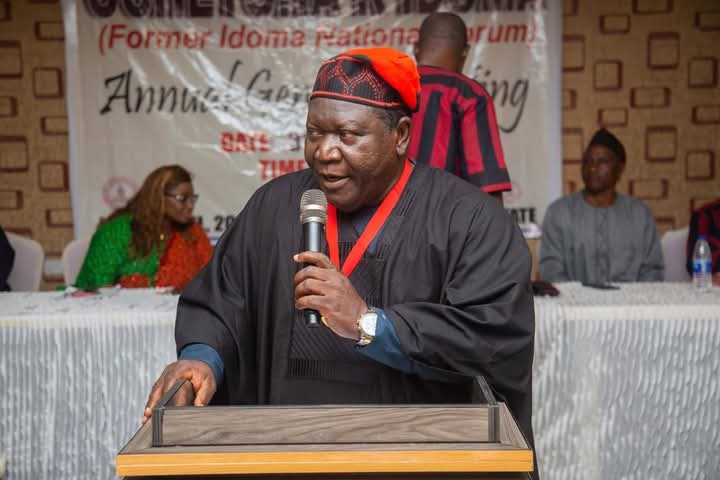
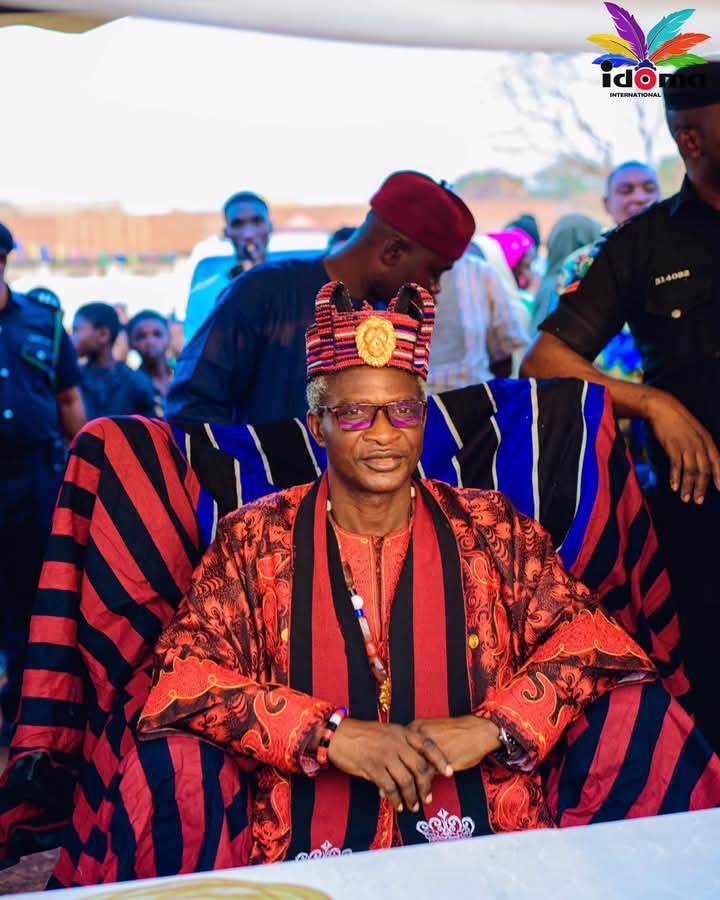
Your Majesty, the Och’Idoma Agaba Idu, Dr. Elaigwu Odogbo Obagaji (CON), The President and Executive Committee of the Idoma Community in the United Kingdom; Distinguished Elders and Community Leaders; Our Mothers, Sisters, and Daughters whose strength holds this community together; Young Professionals and Students building futures in this great nation; Fellow Idomas, wherever in the United Kingdom you have journeyed from to be here today; Ladies and Gentlemen.
Prof Yakubu Aboki Ochefu
I bring you warm greetings from the homeland, from the rolling hills of Otukpo, from the banks of the Benue, from the ancient markets of Orokam, from the farmlands of Apa and Agatu, and from the verdant landscapes of Ogbadibo and Ohimini. Let me begin by acknowledging the vision of those who organised this convention. There is a proverb in our tradition that says “one hand cannot tie a bundle.” The very fact that you are gathered here today, that you have pooled your time, your resources, and your resolve to create this platform, is itself the first and most powerful proof of the thesis I have been invited to expound. You have already demonstrated, by the act of assembling, that unity is strength. My task this afternoon is merely to remind you why this is so, to show you that it has always been so, and to challenge you, with rigour, and with the urgency that our times demand you to translate that strength into transformative action.
II. A Universal Truth: Unity Across Civilisations
Unity is Strength is not merely a slogan but a universal law of survival, recognised independently across civilisations. From Aesop’s bundle of sticks and the Roman ideal of Concordia, to Confucian harmony, Japanese Wa, Ibn Khaldun’s Asabiyyah, and democratic mottos such as E Pluribus Unum and L’union fait la force, history repeatedly confirms the same lesson: divided communities are easily broken, while united ones withstand pressure, defeat stronger enemies, and build enduring institutions. Across cultures and centuries, the evidence is consistent. Through unity, small things grow. Africa carries this truth in its own deepest traditions. Ubuntu teaches that the individual finds meaning only within the community, while Yoruba and Igbo proverbs remind us that no single hand can lift a heavy load and that unity is the majesty of a people. In the twentieth century, this inherited wisdom became the foundation of Pan-Africanism, as leaders such as Kwame Nkrumah and Julius Nyerere understood that newly independent African states could survive external pressure and internal division only by standing together. Unity, therefore, is not sentiment; it is civilisation’s oldest and most reliable strategy for survival, dignity, and collective power.
IV. Opiatoha Ofu;The Idoma Technology of Collective Power
Everything I have described above exists in our own tradition, encoded in the Idoma concept of Opiatoha Ofu. And I want us to understand these words precisely, because they are not passive. Opiatoha is not merely gathering. It is intentional, purposeful, physical and spiritual convergence, the deliberate act of bringing minds, hands, and wills together for a common objective. And Ofu is the kinetic energy that such convergence unleashes strength and the transformative power that emerges only when a community moves as one. In the traditional Idoma setting, Opiatoha Ofu was not a theory. It was the operating system of daily life. No man cleared the farmland alone. No family roofed a house alone. No village defended itself alone. The Oopu, the kindred, and the Ojila, the village assembly, were the institutional architectures through which collective labour was mobilised, disputes were adjudicated, and threats were confronted. Unity was not a wish. It was a technology and our ancestors were its master engineers.
V. Proof in Blood: How Idoma Unity Defeated an Empire
Let me give you the most dramatic proof of Opiatoha Ofu in our entire history. It is a story that is not told often enough, and it needs to be told especially here, and especially to this generation. In the 1830s, the southern frontiers of the Sokoto Caliphate, the largest state in nineteenth-century Africa began to push aggressively toward the Benue River. The Nasarawa sub-emirate of Zaria, established around 1835 by Umaru Makama Dogo, a Fulani warrior dispatched from Zaria, launched wave after wave of raids southward. The objective was territorial expansion and the capture of slaves for tribute to the Caliphate. The primary victims of these incursions were the Idoma of Agatu and Ochekwu, the northernmost Idoma sub-group, who lived along the banks of the Benue, directly in the path of Nasarawa’s advance.
By every conventional calculation, the Idoma should have been overwhelmed. The Caliphate was a continental power. It had cavalry. It had established supply lines. It had the momentum of jihad. The Idoma were politically decentralised they had no single capital for an invading army to seize, no central king whose capture would force a mass surrender. They were governed through lineage systems and mass assemblies like the Ojila. By the military doctrine of the age, this should have made them easy prey. Instead, the Idoma fought the Caliphate to a strategic stalemate. Not with the weapons of empire, but with the weapons of a united, adaptive, and ferociously intelligent community. How did they do it?
First, they refused to fight on the enemy’s terms. Idoma warriors avoided open-field pitched battles where the Caliphate’s cavalry held the advantage. Instead, they exploited their thick savanna, their riverbeds, and their hilly terrain to set devastating ambushes. The very political decentralisation that should have been their weakness became their strength as there was no capital to capture, no throne to topple. Every village was a fortress. Every forest was a trap. Reflect over the meaning of the word Oba-ga-aji and how this derived from a defensive barrier against galloping horses. Second, they deployed asymmetric firepower of extraordinary lethality. Idoma hunters harvested toxins from the African common toad (Sclerophrys regularis) whose parotid glands secrete powerful cardiac glycosides. They mixed these with the sap of toxic plants such as Strophanthus gratus: (poison arrow vine or twisted cord flower), and Euphorbia trigona (African milk tree), boiling the compound into a dark, gummy paste that was smeared onto arrowheads. Even a superficial scratch from one of these arrows could induce rapid cardiovascular collapse. A mounted cavalryman, the Caliphate’s most fearsome weapon, could be killed by a single arrow fired from the cover of forest that his horse could not penetrate.
Third, and I want the scientists in this room to appreciate this. They practised biological warfare. Idoma fighters would intentionally disturb hives of aggressive wild bees and direct the swarms into advancing enemy formations. The stinging swarms caused horses to bolt in uncontrollable panic, shattering cavalry formations and allowing Idoma fighters to pick off the disorganised attackers at will. Fourth, their age-grade system, the Ego and ai-Uta, functioned as a standing citizen militia. Young men organised into specialised cohorts operated hunter-scout networks along the border communities, detecting raiding parties early and giving villages time to evacuate into protected forest retreats or to organise counter-ambushes.
How does this matter for this lecture. None of this was possible without unity. The poison required specialists who gathered toads and botanists who identified plants and weapons-makers who combined them, a supply chain of indigenous knowledge that was coordinated across clans. The ambush tactics required intelligence-sharing between scattered villages. The bee swarm strategy required coordinated timing. The age-grade system required every family in the community to contribute its sons. This was Opiatoha Ofu under the most extreme possible test of survival against an imperial army, and it held. The result? The Idoma preserved their distinct socio-political identity. They were never absorbed into the Caliphate system. They retained their governance structures, their cultural institutions, and their territorial integrity. That you sit here today, in London, knowing that you are Idoma, speaking the language, bearing Idoma names, and carrying Idoma identity is because your ancestors understood that unity is not a slogan. It is a survival technology. And they deployed it with genius.
VI. From the Battlefield to the Boardroom: Opiatoha in the Modern Era
That military genius belongs to the pre-colonial era. But Opiatoha Ofu did not retire with the warriors. It simply changed terrain. The earliest modern expression of the Opiatoha of the Idoma elite came in 1973, barely thirteen years after independence, when Idoma leaders and professionals across Nigeria, pooled their resources to build the first Idoma Community Secondary School in Otobi. Think about what that act represented. This was not a government project. This was not a foreign donor’s initiative. This was the Idoma community, its teachers, its civil servants, its traders, its farmers deciding collectively that their children deserved access to secondary education and then building the institution themselves, with their own money, on their own land, by their own resolve.
That school still stands. It has produced graduates who went on to universities, to the professions, to public service, and indeed to the diaspora, some of whom may be sitting in this very room. The Idoma Community Secondary School is living proof that when the Idoma community channels its collective resources toward a concrete objective, it delivers. It is the precedent that everything I am about to propose rests upon. We are not asking you to attempt something untested. We are asking you to continue a tradition that has already succeeded.
VII. The Diaspora Paradox: Brilliance Without Architecture
That history from the battlefield to Otobi is your inheritance. Now let me speak to your present. As you may be aware, you are the children and grand children of the first generation that first went to study, work and then make the United Kingdom an abode. From our historical records, the first set of educated Idoma who went to the United Kingdom was in 1948. While the records are scanty, we know that from then to now, waves of Idoma sons and daughters went to the UK in the 1950’s 60’s, 70’s and 80’s. The most current set of Idoma who have “Japa”did so in this millenia. That is how come this room contains an extraordinary concentration of talent. There are medical doctors, nurses, engineers, IT professionals, educators, entrepreneurs, and legal practitioners among you. Many of you have achieved remarkable things in one of the most competitive societies on earth. You have passed examinations that break people. You have earned qualifications that open doors. You have built careers that sustain families on two continents. I honour that. The homeland honours that.
But I must also tell you the truth, because that is what elders are for. Individual success in London, in Manchester, in Birmingham, in Edinburgh however impressive remains isolated energy unless it is channelled through Opiatoha. A hundred scattered sparks do not warm a room. But gather those sparks into a single fire, and you can illuminate an entire homeland. That is the paradox of the diaspora: you possess immense wealth, immense intellect, and immense global exposure, yet without a unifying architecture, that immensity produces surprisingly little structural impact back home. The challenge is not talent. The challenge is coordination and trust, moving from philanthropy to investment, from remittance to institution-building, and from individual generosity to collective strategy.
VIII. From Philanthropy to Investment: The Economic Architecture of Opiatoha
Historically, diaspora engagement with the homeland has been transactional. Money flows home for burials, for medical emergencies, for school fees, for church building projects. This is necessary. It is admirable. But let us be honest: it is consumption, not development. It addresses crises. It does not build systems. What I am proposing to you today is a fundamental shift from crisis response to strategic investment, from individual charity to collective capital formation.
The Power of Collective Capital
Consider a simple arithmetic. If five hundred Idoma in the United Kingdom each contributed a structured, modest monthly sum into a pooled Diaspora Development Fund, the aggregate would constitute a serious investment bloc within a single year. That Opiatoha, that gathering of small streams transforms into a river capable of powering transformative projects back home. What kind of projects? Agro-processing facilities that add value to the cassava and yams that our people already produce in abundance, so that the profit stays in Idoma hands rather than flowing to processors in Lagos. Clean energy mini-grids that bring reliable power to rural communities where darkness still falls at six o’clock. Technology incubators that connect our young people to the global digital economy. These are not fantasies. They are business cases waiting for organised capital.
Brain Gain, Not Brain Drain
But money is only one currency of development. The other and in some ways the more powerful is knowledge. Every doctor in this room carries clinical expertise that could save lives in an under-equipped cottage hospital in Benue South. Every IT professional carries skills that could leapfrog an entire generation of Idoma youth into the digital economy. Every educator carries pedagogical knowledge that could transform a school. The diaspora is not a loss to the homeland. It is an extended nervous system a network of sensors embedded in the most advanced economies on earth, gathering knowledge, building relationships, and developing competencies that can be transmitted home. But transmission requires architecture. It requires a platform. It requires Opiatoha. I therefore propose that this convention consider establishing what I call Knowledge Remittance Channels; structured programmes through which UK-based Idoma professionals mentor, train, and upgrade institutions back home. A virtual academy. A telemedicine link. A coding bootcamp supervised from London but delivered in Otukpo. The technology exists. What has been missing is the organisational will to deploy it. That will is Opiatoha Ofu.
IX. Practical Blueprints for Immediate Action
Let me be specific. Visions are necessary, but this convention deserves actionable architecture that can begin working the moment you leave this hall.
The ‘Adopt-a-Community’ Framework
I propose a structured matching system in which the Idoma Community UK partners directly with specific communities back home to solve targeted problems. Not abstract development. Specific, measurable interventions: equipping a named cottage hospital, digitising a named school’s library, funding a borehole in a named village. When the beneficiary is specific and the outcome is visible, trust grows and trust is the oxygen of sustained diaspora engagement.
The Idoma Virtual Academy and Tech Incubator
The youth of Otukpo, Apa, Agatu, Ogbadibo, and Ohimini are not lacking in intelligence. They are lacking in access. A diaspora-funded virtual academy supervised by your professionals here in the UK could deliver training in coding, data science, digital marketing, and global business practice directly to young Idomas in the homeland, plugging them into the global digital economy without requiring them to leave their communities.
Institutional Advocacy and Public-Private Partnerships
A unified Idoma Community UK carries a collective voice that individual members, however distinguished, cannot match. That collective voice can engage local government, traditional institutions under the Och’Idoma, federal agencies, and private investors through structured Public-Private Partnerships to protect and modernise our regional assets. Unity is not just internal solidarity. It is external leverage.
The Agbenu Initiative: Learning from the Past, Building for the Future
Some of you may be aware of the Agbenu Initiative for Idoma Economic Renaissance, a comprehensive framework for sustainable economic transformation that has now reached Version 2.0. This initiative provides an investment-grade roadmap for agro-industrial development, enterprise incubation, and cooperative finance across Idomaland. I commend it to this convention as a reference architecture for your own development planning. But let me address a concern that I know is on many minds, because it would be on mine. Over the years, our community like many communities across Africa has seen well-intentioned funds launched with fanfare, only to dissolve into opacity, mismanagement, and mutual recrimination. Money was collected, promises were made, and then the trail went cold. Those experiences left scars. They eroded the very trust that Opiatoha depends upon. The Agbenu Initiative is designed, from its foundation, to break decisively with that pattern. How? First, through a governance architecture that separates the custodians of the fund from its beneficiaries and from its political sponsors. The fund is structured around independent institutional trustees who are accountable to the contributor community, not to any political interest or individual patron. Second, through radical transparency: every contribution, every disbursement, and every project milestone is tracked through digital dashboards accessible to all stakeholders. You will not need to ask where your money went. You will be able to see it, in real time, from your phone in London. Third, through milestone-gated fund deployment money is released in tranches tied to verified deliverables, not to promises. If a project fails to meet its milestones, the next tranche does not flow. This is the discipline of development finance applied to community investment. The Agbenu Initiative does not ask you to trust blindly. It asks you to verify continuously. And that, I submit, is the only basis on which a diaspora development fund can sustain itself over the long term.
The Otolebi Fund
Alongside strategic investment, the security dimension must not be neglected. The Otolebi Fund concept addresses the immediate, security needs of our community members at home who face crises that cannot wait for long-term development plans. We already have well-governed security fund, managed by an experience team, itself an expression of Opiatoha the community protecting its members when they fall.
The Idoma Centenary Plus Celebration 2026: Opiatoha in Action
And let me tell you something that should fill every person in this room with pride and with confidence that what I am describing is not a theoretical exercise. It is already happening. In March of this year, we launched the Idoma Centenary Plus Celebration 2026, a year-long programme of events marking the centenary of the formal recognition of the Idoma as a distinct administrative and political entity. This is the most ambitious collective undertaking in the recent history of our people, and it is being driven entirely by Opiatoha by the voluntary convergence of Idoma professionals, entrepreneurs, academics, artists, and community leaders pooling their talents and resources toward a shared vision.
The first event was the Centenary lecture which was held in Otukpo and was a resounding success. The Idoma Talent Hunt, held in Abuja, was also resounding success a showcase of the extraordinary creative and intellectual talent that exists among our young people. The Talent Hunt will move to Lagos and then to Otukpo before the grand finale. Coming next in the programme are a Women Empowerment Workshop, and Academic Conference in Otukpo, an Economic Summit in Abuja, and various sports projects at home. Each is designed to mobilise a different dimension of Idoma capacity. The year will culminate in a grand finale in Otukpo in December, where we will bury a time capsule bringing together the full spectrum of Idoma achievement and aspiration in the 21st Century.
I mention the Centenary Plus Celebration here for a reason that goes beyond publicity. This programme is proof of concept. It demonstrates that the Idoma community, when it chooses to organise, when it submits to the discipline of Opiatoha, can plan, resource, and execute complex, multi-city, multi-month programmes to a high standard. If we can do this for a celebration, we can do it for development. The infrastructure of collaboration is being built before your eyes. Your task, as the UK diaspora, is to plug into it and to strengthen it with your own resources, networks, and expertise.
X. What Trips Up Opiatoha: Confronting the Internal Obstacles
I would be failing in my duty as a scholar and as your elder if I spoke only of vision and avoided the difficult truths. Opiatoha Ofu has enemies, and the most dangerous of them are internal.
The Danger of Fragmentation
Every Idoma community, at home and abroad, faces the gravitational pull of fragmentation. Ego, Political division, Sub-clan/kindred rivalries etc. The tendency to import localised divisions the politics of Otukpo vs Apa vs Agatu, Enochi vs Enone, or one district versus another into a diaspora space that should transcend them. When Opiatoha is fractured by micro-politics, Ofu evaporates.
The Accountability Trust Gap
Let me speak plainly. Diaspora-homeland collaborations have often failed not just among the Idoma, but across Africa because of a deficit of trust in the execution of projects back home. Money is sent, promises are made, and results are invisible. This erodes the willingness to contribute, and once that willingness dies, Opiatoha collapses. The solution is not to abandon engagement. The solution is governance. Radical transparency. Clear auditing protocols. Digital project-tracking dashboards that allow every contributor in the UK to see, in real time, how their investment is being deployed. Independent institutional trustees who are accountable to the community, not to political interests. If every pound invested yields visible, verifiable impact, trust will grow. And trust, once established, becomes self-reinforcing. We must also be willing to name and shame those who abuse this trust. Very often we sweep their identities under the carpet on sentimental grounds. This should not be so.
XI. Securing the Cultural Pipeline: A Call to the Next Generation
I want to speak now directly to the young people in this room and to the parents of young people who may not be in this room today. Opiatoha Ofu must extend to the next generation. If our children, born and raised in the United Kingdom, lose the Idoma language, if they cannot greet their grandmother in Idoma, if they do not know the songs, if they have never felt the red earth of Benue between their toes, if they cannot locate Otukpo on a map then the strength that this convention represents ends in this room. It becomes a one-generation project. And a one-generation project, however brilliant, is not a legacy.
The challenge of the diaspora is not merely economic. It is existential. You are holding a cultural flame in a wind that is constantly trying to extinguish it. The host society offers your children a powerful, seductive, all-encompassing identity. That is natural. That is not the enemy. But if Idoma identity is not actively, deliberately, joyfully transmitted through language, through story, through food, through music, through regular contact with the homeland it will quietly disappear. And once it disappears, no amount of money will bring it back. So I charge all of us; let us teach our children. Bring them home. Let them see where they come from. Let them hear the stories. Let them understand that they are not just Nigerians in the UK. They are inheritors of a civilisation that defeated empires with ingenuity and unity. That is a heritage worth fighting for.
XII. The Final Charge
Let me draw toward a close with this reflection. History teaches one lesson with absolute consistency: it punishes fragmentation. It does not matter whether the fragmented are rich or poor, educated or illiterate, at home or abroad. Fragmentation is vulnerability which in a competitive world, is an invitation to irrelevance. But history also teaches that even small communities, when united, can achieve extraordinary things. The Dutch provinces defeated the Spanish Empire. The American colonies defeated the British Crown. And the Idoma a decentralised, non-imperial, farming people fought the Sokoto Caliphate to a standstill and preserved their identity for generations yet unborn. You, the Idoma Community in the United Kingdom, are not a small people in a foreign land. You are an outpost of a civilisation. You are the Opiatoha of Idomaland’s future, assembled on foreign soil but oriented toward home. The question is not whether you have the talent. You do. The question is not whether you have the resources. You do. The question is whether you will choose unity over fragmentation, strategy over sentiment, institution over ego. The United Kingdom is a launchpad, not a terminus. You are not merely Idoma living abroad. You are the forward operating base of the Idoma nation’s future. And if you build the architecture of unity if you move from scattered sparks to a blazing fire there is no limit to what this community can achieve, both here and at home.
Let history record that at this convention, you did not gather merely to reminisce about home. You gathered to rebuild it. Let your Opiatoha be the blueprint. Let your Ofu be the engine. And let the world know that wherever the Idoma gather, in Otukpo, in London, in Manchester, in Birmingham, on any soil and under any sky, unity is our inheritance, unity is our strategy, and unity is our strength. One hand cannot tie a bundle. But this room is full of hands. Let us tie the bundle. Let us make it unbreakable.
Thank you. God bless the Idoma Community in the United Kingdom. God bless Idomaland. And God bless us all.
